When Sacred Text Feels Unsafe: A Trauma-Informed Path Back to the Quran

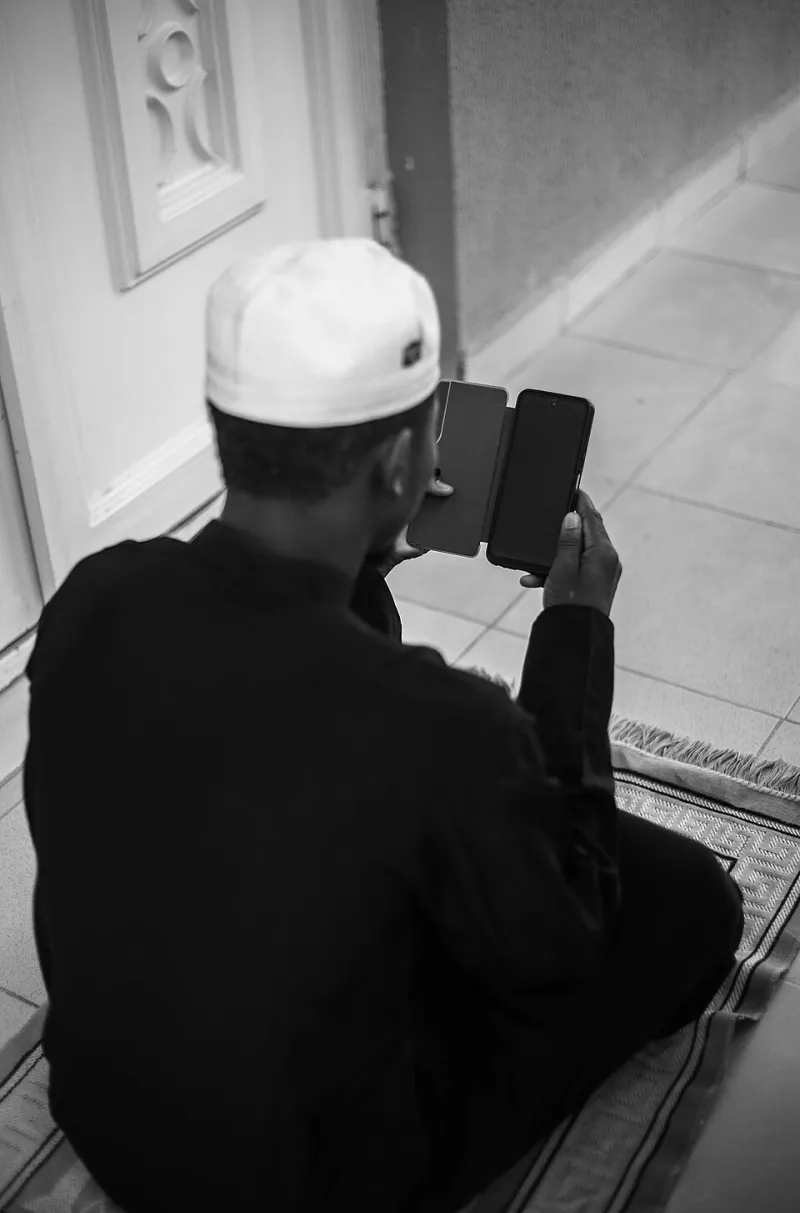
Photo: BurgererSF, CC0, via Wikimedia Commons
For most of her adult life, Aisha — who asked that her full name not be used — found comfort in Quranic recitation. She had memorized portions of the text as a child and returned to those verses in moments of stress or uncertainty. Then, during years of an abusive marriage, the Quran became something different. Her husband quoted it to justify control. Certain surahs were weaponized as arguments for her silence. By the time she left, she could not hear Quranic recitation without feeling her chest tighten.
"I still believed in Allah," she says quietly. "But the Quran felt like it belonged to him. Like he had taken it from me."
Aisha's experience is not isolated. Across the United States, Muslim survivors of domestic abuse, religious coercion, and community-based trauma describe a complicated relationship with the sacred text at the center of their faith. For these individuals, the path back to the Quran — if they choose to walk it — requires something that standard Islamic education rarely provides: a trauma-informed approach.
Understanding the Wound
Before exploring what healing might look like, it is important to name clearly what has happened. When Quranic verses are selectively quoted to justify abuse, control another person, or enforce harmful social hierarchies, the damage is twofold. The immediate harm is to the person being controlled. The longer-term harm is to their relationship with the text itself — a relationship that, under healthier circumstances, might have been a source of strength.
This phenomenon is sometimes called spiritual abuse: the use of religious authority, language, or scripture to manipulate or harm. It is not unique to Islam. Survivors across many religious traditions describe similar experiences. But for Muslim survivors, the specific texture of the wound often involves the Quran — its recited sound, its physical presence, the Arabic phrases embedded in daily prayer.
Mental health professionals who work with Muslim clients increasingly recognize this dynamic. Dr. Rania Awaad, a psychiatrist and Islamic scholar who has written on the intersection of faith and mental health, has emphasized that acknowledging spiritual harm is not an attack on religion — it is a prerequisite for genuine recovery.
The Problem of Spiritual Bypassing
Well-meaning community members sometimes respond to survivors' pain with immediate reassurance: the Quran is mercy, they say. Allah is compassionate. Just return to the text and you will find healing. While these statements are theologically sincere, they can function as a form of spiritual bypassing — using religious language to avoid sitting with someone's real and legitimate pain.
Surah Al-Baqarah (2:286) reminds believers that "Allah does not burden a soul beyond that it can bear." This is a verse of genuine comfort. But offered too quickly to someone still in the acute phase of trauma, it can feel dismissive — as though their suffering requires an immediate theological resolution rather than patient acknowledgment.
Trauma-informed spiritual care begins with listening. It makes room for anger, confusion, and grief. It does not rush toward resolution. And it recognizes that a survivor's complicated feelings about the Quran are not a sign of weak faith — they are a sign that something real was done to them.
Reclaiming the Text on Your Own Terms
For survivors who wish to re-engage with Quranic study, the journey is rarely linear. Some find that beginning with recitation — the sound of the Arabic, without immediate attention to meaning — allows them to reconnect with the text in a more embodied, less intellectually threatening way. The beauty of tajweed, the melodic rules of Quranic recitation, can be a path back to the text for those whose relationship with its content feels fraught.
Others find it helpful to begin with specific surahs chosen for their emotional resonance rather than their theological complexity. Surah Al-Duha (93), revealed at a moment when the Prophet (peace be upon him) felt abandoned and uncertain, offers a tender reassurance: "Your Lord has not forsaken you, nor has He become displeased." For survivors who feel spiritually abandoned — whether by God, by community, or by their own sense of faith — this short chapter can be a gentle re-entry point.
Surah Al-Inshirah (94) similarly addresses the experience of difficulty and relief in intimate, direct language: "Verily, with hardship comes ease." The repetition of this promise within the same short surah is, for many readers, less a platitude than a rhythmic affirmation — something the body can receive even when the mind is still uncertain.
Addressing Misused Verses With Honesty
Any trauma-informed approach to Quranic engagement must be willing to address, directly and honestly, the verses that have been misused to cause harm. Pretending those verses do not exist, or rushing past them with reassurance, does not serve survivors. What serves them is careful, contextual, and honest engagement with the text — ideally alongside a knowledgeable and compassionate teacher.
Scholars within the Islamic tradition have long debated the meaning and application of passages that touch on gender, authority, and interpersonal conflict. The interpretive tradition is not monolithic. Survivors deserve access to that full range of scholarship — including the voices of Muslim feminist scholars, trauma-aware imams, and Islamic psychologists who have thought carefully about how these texts have been used and misused.
Live Quran connects learners with qualified teachers who can provide this kind of nuanced, contextual guidance. For survivors navigating a complicated return to the text, finding the right teacher — one who is patient, learned, and sensitive to the realities of spiritual harm — can make an enormous difference.
You Are Not Starting Over — You Are Coming Home
For survivors, returning to the Quran after a period of distance or pain is not a failure to have maintained faith through difficulty. It is, in many cases, an act of extraordinary courage. The Quran itself speaks repeatedly of Allah's nearness to those who call out in distress. Surah Al-Baqarah (2:186) offers this: "And when My servants ask you concerning Me — indeed I am near. I respond to the invocation of the supplicant when he calls upon Me."
That nearness does not require that a survivor first resolve every complicated feeling about the text. It does not demand a clean, unambiguous return. It meets people exactly where they are — in the middle of their confusion, their grief, their tentative reaching back toward something that once felt like home.
If you are a survivor considering a return to Quranic engagement, know this: your pace is valid. Your questions are welcome. The text is larger than what was done to you with it. And the journey back — however slow, however nonlinear — is one worth taking.