After Ramadan Ends, the Quran Remains: Sustaining Your Sacred Connection Through All Twelve Months
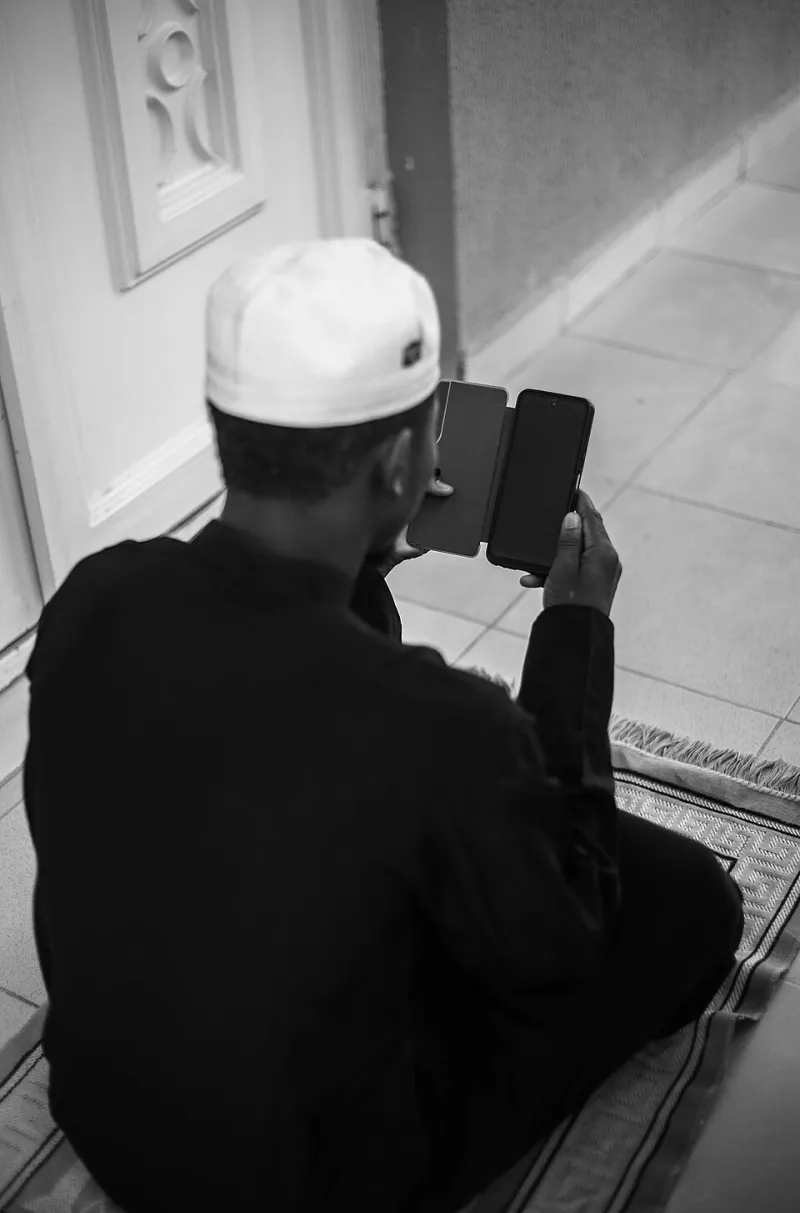
Photo: Pharouqenr, CC BY-SA 4.0, via Wikimedia Commons
There is a phenomenon that nearly every practicing Muslim in America recognizes, even if they have never named it aloud. During Ramadan, the Quran feels alive in a way that is almost difficult to articulate. Verses that seemed abstract suddenly carry weight. Recitations that once felt mechanical become genuinely moving. And then, somewhere in the first weeks of Shawwal, that heightened awareness begins to soften—not disappear entirely, but settle back into something quieter, more routine.
This is not a failure of faith. It is, in many ways, a predictable human response to the removal of a profoundly structured spiritual environment. Understanding why the shift happens is the first step toward doing something meaningful about it.
The Architecture of Ramadan's Spiritual Power
Ramadan works on multiple levels simultaneously. From an Islamic perspective, scholars have long emphasized that the month was specifically designated as the time of the Quran's revelation—a fact the Quran itself affirms in Surah Al-Baqarah (2:185). This theological framing gives the month a gravitational pull: the Quran is not merely being read during Ramadan; it is, in a real sense, being returned to its original context.
But there is also a structural explanation that complements the spiritual one. Ramadan provides what behavioral scientists call environmental scaffolding—a set of external conditions that make a desired behavior easier to perform. Fasting removes the usual distractions of meals and social eating. Tarawih prayers build recitation directly into the evening routine. Communal iftars create accountability and shared intention. The month, in effect, designs away many of the obstacles that otherwise keep Muslims from sustained Quranic engagement.
Research on habit formation consistently shows that behavior is powerfully shaped by context. When the context changes—when Eid arrives and the scaffolding comes down—the behavior often changes with it. This is not weakness; it is neuroscience.
Why the Brain Responds Differently in Ramadan
Studies on rhythm and ritual suggest that repeated, patterned behavior performed within a defined time frame strengthens neural associations between the behavior and its emotional rewards. The daily structure of Ramadan—suhoor before dawn, fasting through the day, breaking fast at Maghrib, reciting through the night—creates a powerful loop of anticipation, action, and fulfillment.
Listening to or reciting the Quran within this loop activates the brain's reward pathways in a context already primed for meaning-making. The heightened emotional sensitivity that accompanies fasting, the reduced cortisol levels some researchers associate with mindful fasting practices, and the communal reinforcement of tarawih all compound to create what might be described as an optimal state for spiritual receptivity.
When that loop is broken after Ramadan, the brain does not automatically transfer the emotional resonance to a new, unstructured context. The Quran is the same. The reward is available. But the architecture that made access feel natural is gone.
What Islamic Scholarship Offers as a Counter-Framework
Classical Islamic scholars were not working with neuroimaging data, but they understood the rhythms of the human soul with remarkable precision. Imam Ibn Rajab al-Hanbali, writing on the spiritual seasons of the Islamic year, described Ramadan not as a destination but as a launching point—a month designed to recalibrate the heart so that it might carry its orientation forward.
The Prophet Muhammad ﷺ is reported to have said that the most beloved deeds to Allah are those performed consistently, even if they are small. This hadith, found in both Sahih al-Bukhari and Sahih Muslim, forms the foundation of a distinctly Islamic approach to sustained practice: regularity over intensity, consistency over spectacle.
This principle directly addresses the post-Ramadan challenge. The goal is not to replicate the emotional peak of Ramadan throughout the year—that would be neither realistic nor necessarily healthy. The goal is to establish a baseline of consistent, intentional engagement that keeps the heart oriented toward the Quran even when the environment is no longer doing the heavy lifting.
Practical Strategies for American Muslims
For Muslims living in the United States, sustaining Quranic practice outside Ramadan presents specific challenges: demanding work schedules, geographic distance from Muslim-majority communities, and a cultural environment that does not reinforce Islamic rhythms the way a Muslim-majority society might. These are real obstacles, and they deserve honest acknowledgment.
Anchor your recitation to an existing routine. Behavioral research on habit stacking suggests that linking a new behavior to an already-established one dramatically increases its staying power. For many American Muslims, this might mean reciting a portion of the Quran immediately after Fajr prayer, before a morning commute, or during a lunch break. The specific time matters less than its consistency.
Shrink the daily commitment deliberately. One of the most common post-Ramadan mistakes is attempting to maintain Ramadan-level recitation volume in a non-Ramadan context. When that volume inevitably slips, discouragement follows. Instead, commit to a minimum that feels almost too easy—even five to ten minutes of daily recitation—and allow it to grow naturally.
Seek communal accountability outside the mosque. Tarawih provides community during Ramadan. Outside the month, that structure must be created intentionally. Online Quran circles, accountability partners through platforms like LiveQuran, and small study groups within local Islamic centers can replicate the communal dimension that makes Ramadan practice feel supported.
Engage with meaning, not just recitation. Many Muslims find that post-Ramadan engagement deepens when they shift from volume-focused recitation toward reflection-focused reading. Spending time with a single ayah—reading its tafsir, sitting with its meaning, journaling a response—can sustain emotional engagement during months when cover-to-cover recitation feels out of reach.
Mark the Islamic calendar's other spiritual seasons. Ramadan is the most prominent of Islam's sacred seasons, but it is not the only one. The first ten days of Dhul Hijjah, the night of the 15th of Sha'ban, and the day of Ashura all carry specific spiritual significance. Using these moments as mini-renewals of Quranic commitment helps prevent the year from feeling like a flat expanse between Ramadans.
The Quran Is Not Seasonal
There is a quiet danger in unconsciously treating the Quran as a Ramadan practice—something to be intensified in one month and quietly shelved in others. The Quran describes itself as huda lin-nas, a guidance for all of humanity, offered without seasonal qualification. Its light is not dimmer in November than it is in the final nights of Ramadan. What changes is our readiness to receive it.
The work of sustaining a year-round connection is, at its core, the work of sustaining that readiness—removing the obstacles, building the structures, and returning again and again with intention, even when the environment offers no scaffolding at all.
Ramadan will come again. But the Quran is here now, waiting to be opened.