Common Ground, Sacred Words: How American Muslims Use the Quran to Deepen Interfaith Understanding

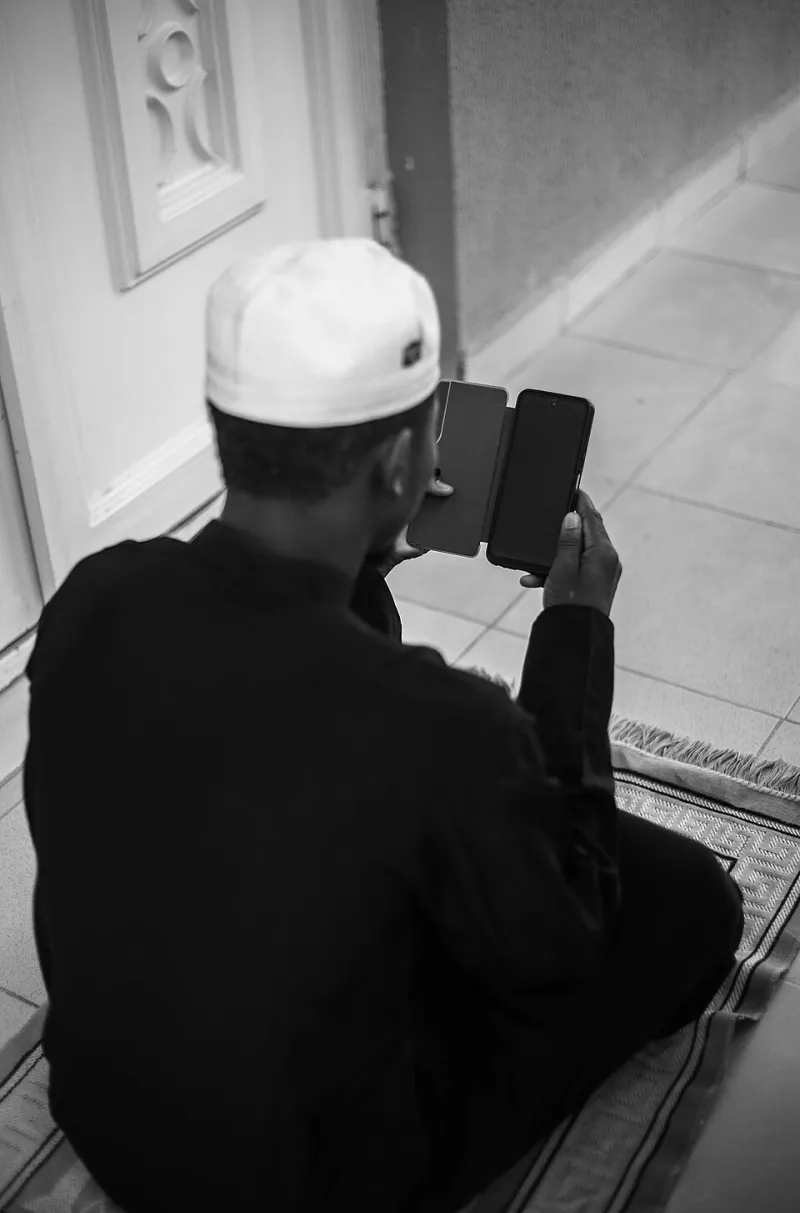
Photo: Ganesh Mohan T, CC BY-SA 4.0, via Wikimedia Commons
In church basements, synagogue halls, and university auditoriums across the country, a quiet but significant movement is unfolding. Muslim Americans are sitting across the table from Christians, Jews, Buddhists, and secular humanists — and they are bringing the Quran with them. Not as a weapon of debate, but as a document of invitation.
For many Muslim community leaders, the Quran is not simply a text to be recited in private devotion. It is, they argue, a living guide for how to engage the broader world — including those who hold different beliefs. And increasingly, that conviction is shaping the way interfaith dialogue happens in American civic life.
What the Quran Actually Says About Other Faiths
One of the most frequently cited passages in interfaith contexts comes from Surah Al-Baqarah (2:62): "Indeed, those who believed and those who were Jews or Christians or Sabeans — those who believed in Allah and the Last Day and did righteousness — will have their reward with their Lord." For Muslim participants in interfaith dialogue, this verse is foundational. It acknowledges the spiritual sincerity of other traditions without erasing theological distinctions.
Similarly, Surah Al-Imran (3:64) is often introduced in Jewish-Muslim and Christian-Muslim conversations: "Say, 'O People of the Scripture, come to a word that is equitable between us and you — that we will not worship except Allah and not associate anything with Him and not take one another as lords instead of Allah.'" The phrase Ahl al-Kitab — People of the Scripture — is itself a Quranic recognition that Jews and Christians share in a lineage of divine revelation. For many Muslim Americans, invoking this term in dialogue signals respect rather than rivalry.
Imam Khalid Latif, a prominent Muslim chaplain based in New York City, has described his approach to interfaith work as beginning always with listening — and then allowing the Quran to speak to what has been heard. "When someone shares their pain or their questions about God, I don't immediately open with a theological argument," he has said in public forums. "I look for the verse that meets them where they are."
Shared Prophets, Shared Humanity
Perhaps no aspect of the Quran generates more immediate resonance in interfaith settings than its treatment of the biblical prophets. Abraham, Moses, Jesus, and Mary are all figures of profound significance in the Quran — and their presence provides natural entry points for dialogue with Christians and Jews.
Surah Maryam, the nineteenth chapter, devotes an entire narrative to Mary, mother of Jesus, treating her with a reverence that often surprises Christian participants in interfaith programs. Jesus — referred to as Isa ibn Maryam — is described as a prophet, a word, and a mercy from God. While Muslims and Christians differ on the question of Jesus's divine nature, the Quran's deep respect for his mission provides a foundation for respectful conversation rather than immediate confrontation.
Muslim educators working in interfaith contexts frequently use this shared prophetic heritage as a starting point. At organizations like the Interfaith Youth Core, founded by Eboo Patel and active across dozens of American campuses, Muslim participants are trained to articulate their faith through stories — including Quranic stories — that resonate across traditions.
Addressing Misunderstandings Directly
Interfaith dialogue in America does not happen in a vacuum. It takes place against a backdrop of media narratives, political anxieties, and genuine historical grievances. Muslim participants in these conversations are often called upon to address specific verses that have been cited — sometimes out of context — to portray Islam as inherently intolerant.
Community leaders emphasize that responsible Quranic literacy is essential to this work. Verses must be understood within their historical context, their surrounding passages, and the broader ethical framework of the text. Surah Al-Mumtahanah (60:8), for instance, is rarely quoted in public discourse but is frequently referenced in interfaith training: "Allah does not forbid you from being kind and equitable to those who have neither fought against your faith nor driven you out of your homes. Surely Allah loves those who are just."
For Muslim Americans navigating post-9/11 suspicion and contemporary Islamophobia, this verse functions as both a personal anchor and a public rebuttal. It affirms that ethical engagement with non-Muslims is not a concession — it is a Quranic command.
Building Bridges in Practice
Across the United States, mosque-synagogue partnerships, Muslim-Christian prayer breakfasts, and campus interfaith councils are creating spaces where this kind of Quran-informed dialogue can happen regularly. In cities like Chicago, Houston, and Minneapolis — all home to large and diverse Muslim communities — these programs have become meaningful features of civic life.
Participants often describe a similar arc: initial awkwardness gives way to curiosity, and curiosity opens into genuine relationship. The Quran, in these settings, functions less as a theological boundary and more as a window — allowing others to see not just what Muslims believe, but how they understand their obligations to the rest of humanity.
For those who wish to engage in this kind of dialogue, Live Quran offers resources for studying the relevant surahs in depth, including recitation sessions and guided commentary that can help learners understand these passages in their full context. Knowing a verse well — its language, its occasion of revelation, its interpretive history — is the foundation of sharing it wisely.
An Ongoing Conversation
Interfaith dialogue is not a problem to be solved. It is a practice to be sustained. And for Muslim Americans who take the Quran seriously as a guide for living in a pluralistic society, that practice begins with the text itself — with its expansive vision of human dignity, its recognition of shared sacred history, and its insistence that justice and kindness are not optional virtues but divine expectations.
The Quran does not ask Muslims to dissolve their convictions in the name of harmony. It asks them to carry those convictions with integrity — and to extend to others the same respect for sincere faith that they hope to receive in return. In a country as religiously diverse as the United States, that is not a small thing. It may, in fact, be exactly what the moment requires.