Reading the Quran Again for the First Time: How Third-Culture Muslims Are Unlocking New Meaning in Sacred Verses

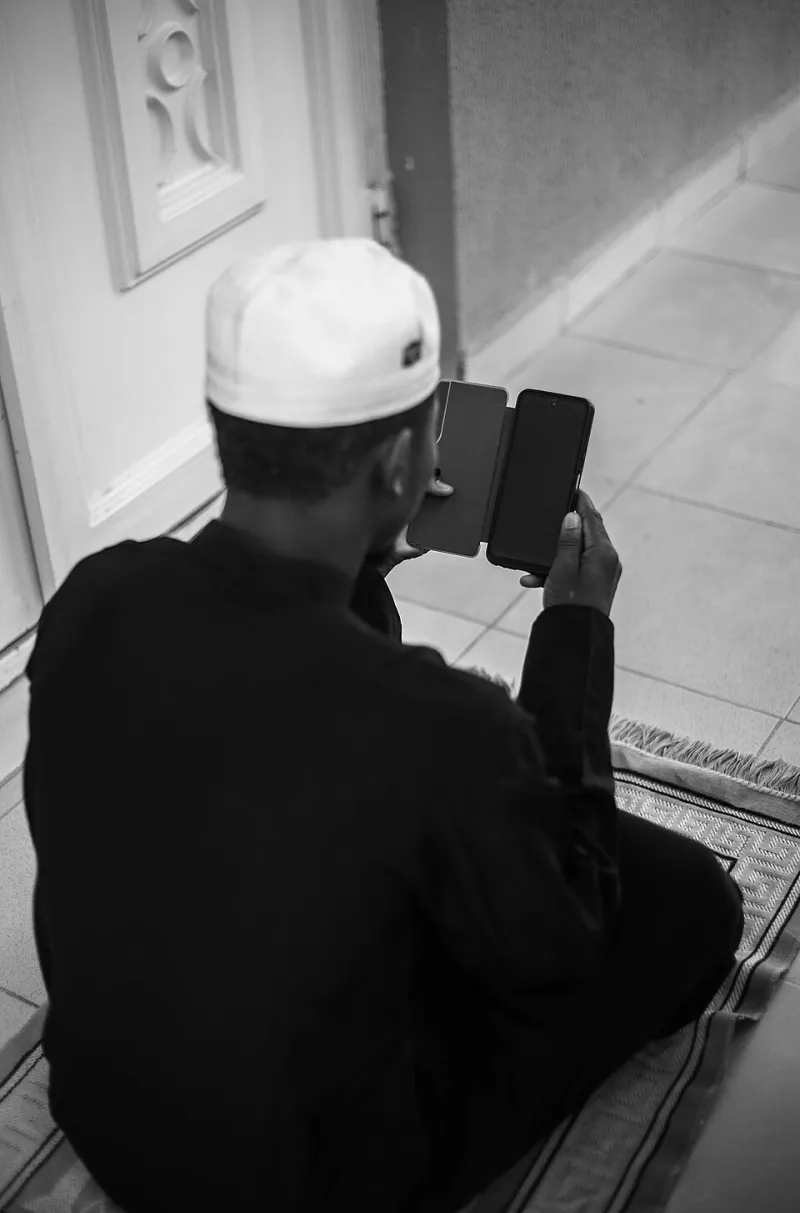
Photo: Dinoeyad, CC BY-SA 4.0, via Wikimedia Commons
There is a particular kind of disorientation that comes with belonging to more than one world. You celebrate Eid in a neighborhood that has never heard of it. You explain your faith to coworkers while privately wrestling with questions your mosque has not yet learned to hold. You read the Quran in Arabic, perhaps fluently, and yet something in you suspects you have not yet heard everything it has to say.
For a growing number of American Muslims who identify as third-culture individuals—those raised at the intersection of immigrant heritage, Islamic tradition, and mainstream American life—the Quran is not a static text. It is a living conversation that changes as they change. Scholars, counselors, and everyday believers are increasingly describing a phenomenon in which returning to familiar verses after years of American lived experience produces something almost startling: new understanding.
What Is "Return Reading"?
The term "return reading" has gained quiet traction in Islamic educational circles to describe the experience of encountering a verse one has memorized or recited since childhood and suddenly perceiving dimensions that were previously invisible. It is not a new concept in Islamic scholarship—classical commentators such as Ibn Kathir and Al-Qurtubi acknowledged that the Quran reveals itself differently to readers at different stages of knowledge and spiritual development. What is newer is the recognition that cultural complexity itself can serve as a lens.
Dr. Zainab Alwani, a scholar of Islamic jurisprudence and a professor in the Washington, D.C., area, has observed this dynamic in students she has taught over decades. "The Quran speaks to the human condition," she has noted in public lectures, "and the human condition is always situated somewhere. When a young Muslim grows up navigating two sets of expectations, two languages, two definitions of success, they bring all of that to the text. The text responds."
This responsiveness is not metaphorical. Classical Islamic hermeneutics has long held that the Quran contains layers of meaning—the apparent (zahir) and the inner (batin)—and that sincere engagement with the text, combined with increasing knowledge and taqwa, unlocks progressively deeper registers. Third-culture American Muslims may be accessing these layers through an unconventional but entirely legitimate pathway: the pressure of living between worlds.
The Verses That Come Alive
Consider Surah Al-Hujurat (49:13): "O humanity, indeed We have created you from male and female and made you peoples and tribes so that you may know one another." For a child in Sunday school, this verse is often taught as a simple lesson in diversity. For a thirty-five-year-old Muslim American who has spent years explaining her identity to both her Pakistani grandmother and her white colleagues in a Chicago law firm, the verse carries an almost biographical weight. The word lita'arafu—so that you may know one another—suddenly sounds less like a platitude and more like a divine acknowledgment of the difficulty and dignity of her exact situation.
Similarly, Surah Al-Baqarah (2:286)—"Allah does not burden a soul beyond that it can bear"—reads differently to someone who has carried the weight of generational expectation alongside the demands of an American professional life. The verse does not become something other than what it is. It becomes more fully what it always was.
Imam Khalid Latif, Executive Director of the Islamic Center at New York University, has spoken publicly about how context shapes Quranic comprehension. In his view, the diversity of Muslim American experiences is not a complication for Quranic understanding—it is a resource. "Our community has a kind of depth of experience that, if we let it, can produce some of the most profound engagement with the text that this ummah has seen in centuries," he has said.
The Role of Spiritual Maturity
Return reading is not merely about cultural biography. It is also about the accumulation of spiritual practice over time. Muslims who have maintained a consistent relationship with daily recitation, even imperfectly, report that the Quran functions differently for them at forty than it did at fifteen. Grief, professional failure, parenthood, loss of faith, and its recovery—all of these experiences become interpretive tools.
This aligns with a principle articulated by the classical scholar Al-Ghazali, who argued in Ihya Ulum al-Din that the heart must be prepared to receive the Quran's meaning. Preparation, in his framework, involved both moral purification and accumulated life experience. Third-culture American Muslims, by virtue of the particular trials their lives present, may arrive at that preparation through a distinctly American route.
Nadia Rahman, a family therapist in Houston who incorporates Quranic reflection into her clinical practice with Muslim clients, describes the moment of return reading as one of the most therapeutically significant events she witnesses. "Something shifts when a client realizes the Quran was already speaking to their experience," she says. "It is not just spiritual. It is a felt sense of being known."
Recitation as the Gateway
At LiveQuran, we have long held that recitation is the foundation of Quranic engagement. The act of hearing sacred words—whether in a live recitation session or in the quiet of one's own voice—creates the conditions in which return reading becomes possible. You cannot encounter a verse anew if you have not first encountered it at all.
For third-culture Muslims who may have drifted from regular recitation during years of navigating dual identities, returning to the practice of listening and reading aloud is often the first step toward this deeper engagement. Many report that it is not study alone that unlocks new meaning—it is the patient, repeated act of sitting with the words.
Practical Pathways for Return Reading
If you recognize yourself in this experience—or wish to cultivate it—consider the following approaches, drawn from scholarly recommendation and practitioner experience.
Select a verse that once felt settled. Choose a verse from your childhood education that you believe you fully understand. Read it again, slowly, in Arabic if possible, and then in a translation you trust. Ask yourself what in your life over the past decade the verse might be addressing.
Write before you research. Before consulting tafsir, journal your immediate response. What does the verse call to mind? What questions does it raise? Only then bring in classical commentary to deepen what your own reflection has begun.
Recite in community. Join a live recitation circle, whether in person or through a platform like LiveQuran. Hearing the verse in another voice, in the context of communal worship, often surfaces meanings that solitary reading conceals.
Bring your whole self. Do not bracket your American experience when you open the Quran. Your professional life, your relationships, your civic identity—these are not distractions from understanding. They are, for third-culture Muslims especially, part of the interpretive equipment the divine has given you.
The Quran Has Always Traveled
Islamic history is, in part, a history of the Quran arriving in new contexts and being received by new peoples who brought their own cultures and questions. The scholars of Andalusia read it differently than the scholars of Baghdad. The Muslims of West Africa brought their own interpretive traditions. American Islam is not an exception to this pattern—it is the latest chapter in it.
For third-culture Muslims in the United States, the Quran is not waiting to be understood in spite of their complexity. It may be waiting to be understood precisely because of it.