The Quran as a Source of Healing: Islamic Spiritual Practices and the Modern Wellness Journey
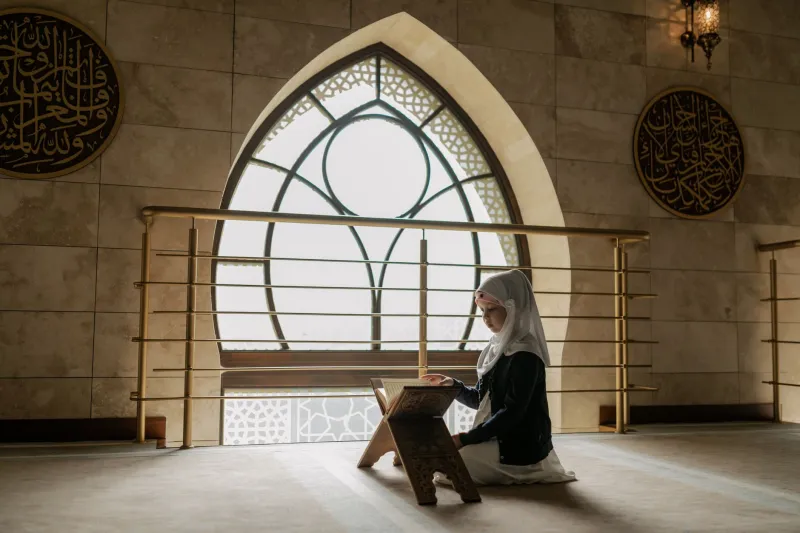
In recent years, the American wellness landscape has expanded dramatically to include meditation retreats, breathwork seminars, gratitude journaling, and an ever-growing library of therapeutic modalities. Amid this cultural shift toward holistic self-care, many Muslim Americans are discovering — or rediscovering — that their own tradition has always contained a profound healing framework. The Quran, Islam's sacred scripture, speaks directly to the conditions that afflict modern hearts: anxiety, grief, burnout, and the existential search for meaning.
This is not a claim that Quranic recitation replaces clinical mental health care. Rather, it is an invitation to examine how Islamic spiritual practice can serve as a meaningful, theologically grounded complement to the broader pursuit of well-being.
What the Quran Says About the Inner Life
The Quran addresses the human psyche with remarkable intimacy. It acknowledges grief openly — "Indeed, with hardship comes ease" (Quran 94:5-6) — and speaks to the restlessness of the heart with one of its most frequently cited verses: "Verily, in the remembrance of Allah do hearts find rest" (Quran 13:28). These are not merely poetic consolations. They reflect a theological understanding of human psychology that positions the divine relationship as central to emotional equilibrium.
Islamic scholars throughout history have written extensively about the nafs — the self or soul — and its various states: the soul at peace (nafs al-mutma'inna), the soul in struggle (nafs al-lawwama), and the soul inclined toward harm (nafs al-ammara). This classical framework maps, in meaningful ways, onto contemporary psychological concepts such as emotional regulation, internal conflict, and impulse management. The Quran does not simply identify these states; it provides recitations and remembrances intended to guide the soul toward greater peace.
Anxiety and the Practice of Recitation
Anxiety is among the most prevalent mental health challenges in the United States, affecting tens of millions of adults annually according to the National Institute of Mental Health. For Muslim Americans navigating a complex societal landscape — balancing professional demands, family expectations, and questions of identity — anxiety can feel particularly acute.
Certain Quranic passages have been traditionally recited for their calming and grounding effects. Surah Al-Fatiha, recited in every unit of the five daily prayers, functions as both supplication and orientation — a moment of deliberate return to the divine presence. Surah Al-Baqarah's final two verses, known as Al-Baqarah 285-286, are widely recited before sleep and are understood in Islamic tradition to offer protection and comfort.
The act of recitation itself — measured, rhythmic, focused — shares structural similarities with mindfulness-based practices that have demonstrated efficacy in reducing physiological markers of stress. The intentional breath required for proper tajweed, the focused attention on pronunciation and meaning, and the embodied experience of sound all engage the nervous system in ways that promote calm. This is not coincidental; it reflects the holistic design of Islamic worship.
Nadia H., a licensed therapist practicing in the Washington, D.C. area and a practicing Muslim, integrates this perspective into her clinical work. "I never prescribe religious practice as treatment," she notes, "but when Muslim clients tell me that reciting Ayat al-Kursi before bed helps them sleep, I take that seriously. Spirituality is a legitimate resource, and the Quran is a profound one."
Grief, Loss, and the Quranic Acknowledgment of Sorrow
One of the most striking features of the Quran as a spiritual resource is its willingness to sit with sorrow rather than dismiss it. The story of Prophet Yaqub (Jacob), who wept so profoundly over the loss of his son Yusuf (Joseph) that his sight was affected, is recounted without judgment. His grief is presented as human, dignified, and ultimately held within the mercy of Allah.
For Muslim Americans who have experienced loss — whether of a loved one, a relationship, a sense of safety, or a former identity — this acknowledgment carries genuine therapeutic weight. Grief counselors often emphasize the importance of having one's pain witnessed and validated. The Quran, in its treatment of sorrow, performs precisely this function.
The recitation of Inna lillahi wa inna ilayhi raji'un — "Indeed, to Allah we belong, and to Him we shall return" (Quran 2:156) — is prescribed in Islamic tradition upon hearing news of loss. This phrase is not merely a ritual response; it is a theological reorientation, a gentle reminder that all things exist within a larger divine context. Many who have recited it in moments of acute grief report that it provides not an escape from pain, but a container for it.
Burnout, Purpose, and the Quranic Vision of Human Dignity
Burnout — characterized by exhaustion, cynicism, and a diminished sense of personal efficacy — has reached epidemic proportions in American professional culture. The Quran's response to this condition is rooted in its vision of human purpose.
Islam teaches that human beings were created as khalifah — stewards or vicegerents — on the earth, entrusted with meaningful responsibility while remaining in relationship with their Creator. This framework situates daily work and effort within a context of divine meaning, countering the purposelessness that often underlies burnout. The Quran also repeatedly emphasizes rest, balance, and the sanctity of the human body as a trust (amanah) from Allah.
Regular engagement with the Quran — through recitation, reflection, and structured learning such as that offered through Live Quran — can serve as a form of spiritual replenishment that addresses the root causes of burnout rather than simply its symptoms.
A Holistic Resource, Faithfully Understood
The Quran's capacity to address emotional and psychological suffering does not depend on contemporary wellness language to validate it. It has served this function for over fourteen centuries, across cultures and continents. What the modern wellness conversation offers is a shared vocabulary that makes these ancient resources accessible to new audiences.
For Muslim Americans seeking a spiritually grounded approach to emotional well-being, the Quran remains an inexhaustible resource — one that speaks to the full complexity of human experience with compassion, wisdom, and the authority of divine revelation.