Touching the Word of God: How Deaf and Hard-of-Hearing Muslims Are Reshaping Quranic Access and Learning
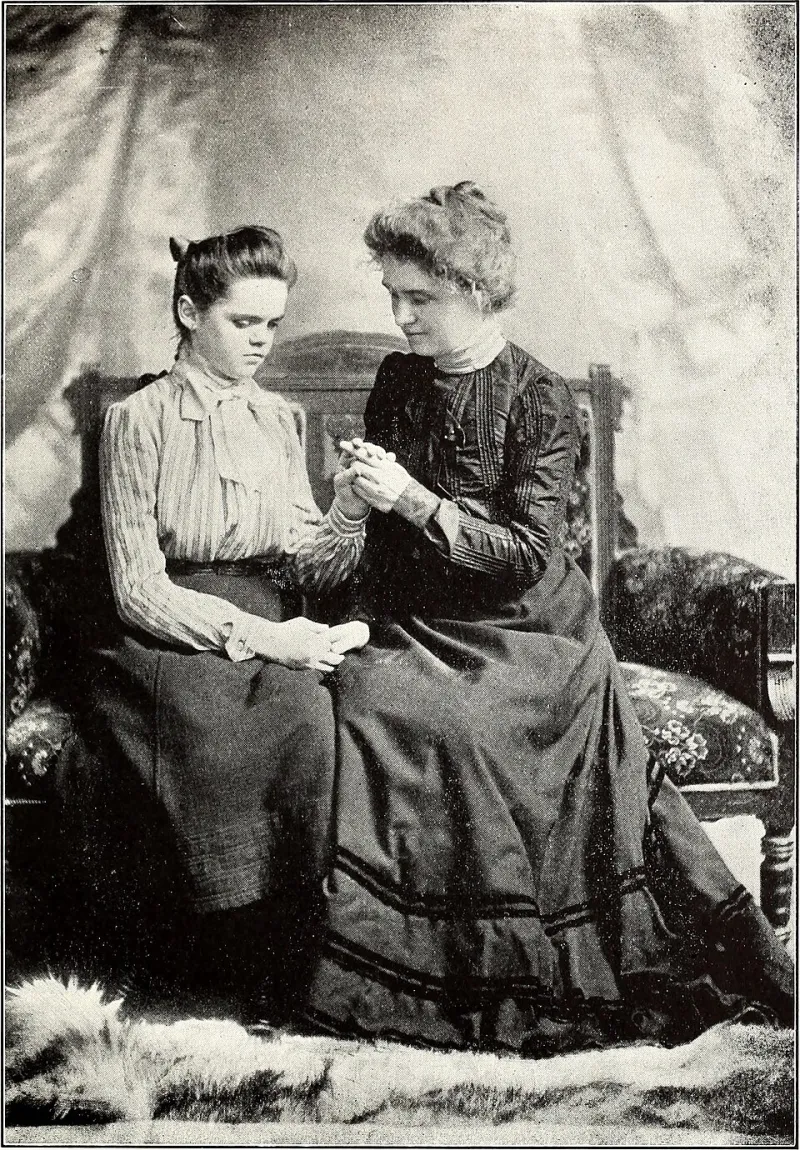
Photo: Internet Archive Book Images, No restrictions, via Wikimedia Commons
For the millions of Muslims worldwide who are deaf or hard of hearing, the Quran's profound spiritual power has never been diminished — but the pathways to accessing it have often been unnecessarily narrow. Across the United States, a growing community of deaf Muslim educators, technologists, and learners is reshaping what Quranic engagement looks, feels, and sounds like for every kind of learner.
The assumption that Quranic learning is inherently an auditory experience is, upon examination, both understandable and incomplete. The Quran was revealed orally, preserved through recitation, and transmitted across generations through the human voice. Yet the text itself — its meaning, its wisdom, its spiritual weight — is not confined to sound. For deaf and hard-of-hearing Muslims, the journey into the Quran is not a lesser version of what hearing Muslims experience. It is a distinct, rich, and deeply valid path of its own.
A Community Too Long Overlooked
The National Institute on Deafness and Other Communication Disorders estimates that approximately 15 percent of American adults report some degree of hearing difficulty. Within the American Muslim community — conservatively estimated at three to four million people — that figure represents a substantial population whose Quranic learning needs have historically received minimal institutional attention.
Many deaf Muslims in the United States describe growing up feeling peripheral to mosque life. Khutbahs (Friday sermons) were delivered without interpreters. Quran classes assumed auditory comprehension. Community events rarely included American Sign Language (ASL) interpretation. The message, even when unintentional, was that full participation required hearing.
That landscape is beginning to shift — driven largely by deaf Muslims themselves, who have refused to accept marginalization as a theological inevitability.
Visual Learning and the Written Quran
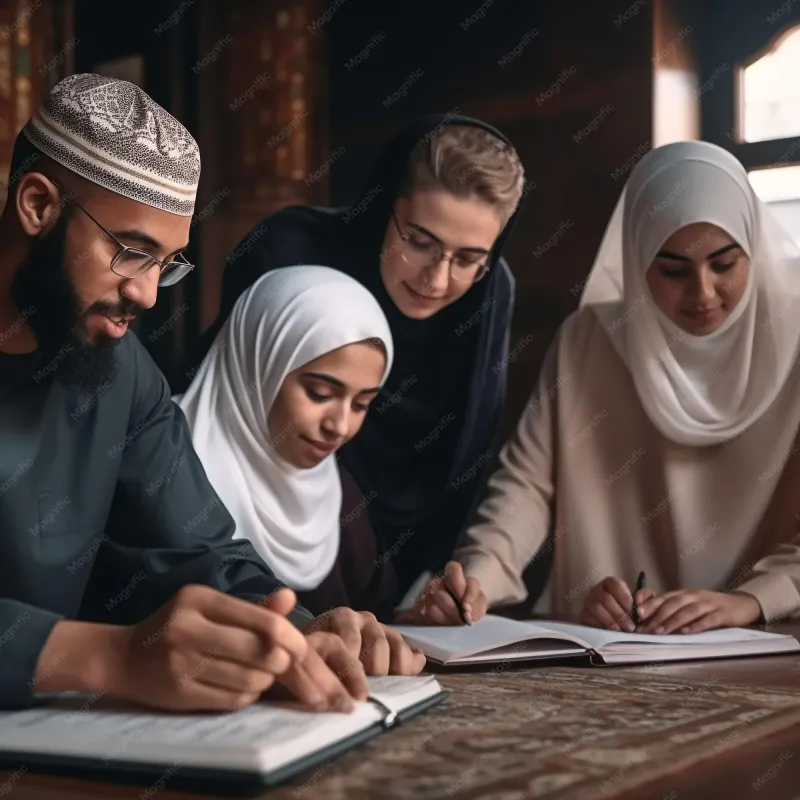
For many deaf and hard-of-hearing learners, the written Arabic text of the Quran is not a supplement to recitation — it is the primary medium of engagement, and a profound one. The visual architecture of Arabic script, with its distinctive letterforms, diacritical marks, and flowing calligraphic tradition, offers a rich aesthetic experience entirely independent of sound.
Deaf Muslim educators have developed curriculum approaches that foreground visual engagement with the Quranic text. Color-coded tajweed charts — which traditionally help hearing learners identify pronunciation rules — can be repurposed to help deaf learners recognize patterns in the written text, distinguish letter forms, and develop a visual fluency with Arabic script that is both academically rigorous and spiritually meaningful.
Meaningful translation study is equally central. Deaf learners who engage deeply with high-quality English translations and tafsir (exegesis) often develop a sophisticated understanding of Quranic meaning that rivals — and in some cases surpasses — that of hearing peers who have focused primarily on phonetic recitation without comprehension.
ASL Interpretation and Signed Quranic Engagement
American Sign Language is not simply a manual encoding of English — it is a complete, grammatically complex language with its own syntax, idiom, and expressive range. For deaf American Muslims, ASL offers a natural medium for engaging with Quranic meaning in ways that honor both the depth of the text and the richness of their native language.
A small but growing number of Muslim educators and interpreters are developing ASL resources for Quranic learning. These include signed translations of key surahs, ASL-interpreted khutbah recordings available online, and community workshops that bring deaf and hearing Muslims together around shared Quranic study.
The challenge — and it is a genuine one — is that there is no universally standardized Islamic sign vocabulary in ASL. Terms like taqwa (God-consciousness), iman (faith), and salah (prayer) require consistent, community-agreed signs to be taught effectively. Efforts to develop this vocabulary are ongoing, led by deaf Muslim scholars and community advocates who understand that linguistic accessibility is a prerequisite for genuine inclusion.
Haptic Technology and the Future of Multisensory Quranic Experience
Technology is opening entirely new dimensions of Quranic engagement for deaf and hard-of-hearing learners. Haptic devices — which translate sound into tactile vibration — allow users to physically feel the rhythmic and melodic qualities of Quranic recitation in ways that were previously inaccessible.
Researchers and accessibility advocates have begun exploring how haptic wristbands and vibrotactile vests can be calibrated to the specific acoustic properties of tajweed recitation. The rhythmic patterns of Quranic prosody — the elongations, the pauses, the cadences — can be rendered as distinct vibrational signatures, giving deaf users a physical sense of the recitation's structure even in the absence of auditory input.
While this technology remains in relatively early stages of application within Islamic educational contexts, its potential is significant. Deaf Muslim learners who have experimented with haptic Quran listening describe the experience as unexpectedly moving — a reminder that the Quran's capacity to touch the human being is not metaphorical, but can be, quite literally, physical.
Inclusive Teaching Strategies for Quran Educators
For hearing Quran teachers who wish to make their instruction genuinely accessible to deaf and hard-of-hearing students, a number of practical strategies have proven effective.
First, visual clarity matters enormously. Ensuring that the teacher's face is visible — particularly the lips — allows lip-reading students to supplement their understanding. Teaching in well-lit environments, facing the class rather than a whiteboard, and using visual aids consistently are foundational accommodations.
Second, written materials should accompany all verbal instruction. Providing printed or digital Arabic text alongside English transliteration and translation ensures that deaf learners can follow lessons without depending on auditory cues.
Third, partnering with certified ASL interpreters for Quran classes — rather than relying on informal interpretation by bilingual community members — ensures accuracy, particularly when nuanced theological concepts are being discussed.
Finally, and perhaps most importantly, deaf students should be treated as full participants rather than recipients of charity. Inviting deaf learners to share their own insights, to lead portions of study sessions, and to contribute to curriculum development produces richer educational environments for everyone.
The Theology of Inclusion
Islamic theology offers a compelling basis for the work of Quranic accessibility. The Quran itself addresses people of all capacities, and Islamic jurisprudence has long recognized that religious obligations are calibrated to individual circumstance — a principle encapsulated in the Arabic concept of taysir, or ease. Allah does not burden a soul beyond its capacity (2:286).
More than a legal principle, this reflects a theology of radical inclusion — the conviction that every human being, regardless of ability, possesses an innate capacity for spiritual connection and is deserving of the tools to cultivate it.
For deaf and hard-of-hearing Muslims across the United States, that connection with the Quran is not waiting to be invented. It already exists, in vibrant and varied forms. What the broader Muslim community is being called to do is recognize it, resource it, and celebrate it as an expression of the Quran's boundless reach.