Barakah in Business: The Quranic Principles That Guide Muslim Entrepreneurs in America
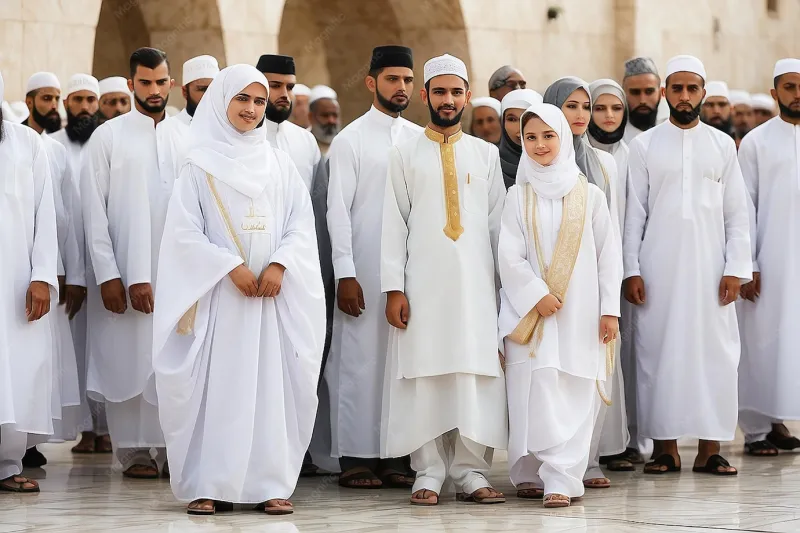
Photo: Muslim business owner professional workspace ethical commerce, via img.freepik.com
When Nadia Rahman launched her halal catering company in Atlanta five years ago, she made a decision that her business school professors might have questioned: she turned down a lucrative contract because the client wanted her to misrepresent the sourcing of her ingredients. The financial loss stung. But Nadia, who had spent years studying the Quran with an online teacher, was clear on her reasoning.
"The Quran is explicit about honest trade," she explains. "If I compromise that to grow faster, I'm not building a business — I'm building something hollow."
Nadia's story is not unusual among Muslim American entrepreneurs. Across the country, business owners are drawing directly on Quranic teachings to guide everything from hiring practices to pricing models, from supplier relationships to how they handle debt. The result is a distinctive approach to enterprise that integrates spiritual accountability into the daily rhythms of commerce.
What the Quran Says About Commerce
The Quran addresses economic life with remarkable specificity. Unlike texts that relegate financial matters to secondary status, the Quran devotes significant attention to the ethics of trade, the dangers of exploitation, and the spiritual dimensions of wealth.
Surah Al-Mutaffifin (83:1-3) opens with a stark warning: "Woe to those who give less than due — who when they take a measure from people, take in full, but when they give by measure or by weight to them, they give less." For Muslim business owners, this passage is not merely a historical rebuke of ancient market fraudsters. It is a living standard applied to every invoice, every service agreement, and every negotiation.
Surah Al-Baqarah (2:275-280) addresses the prohibition on riba — often translated as usury or exploitative interest — at considerable length, signaling that financial ethics are a matter of spiritual gravity. Many Muslim entrepreneurs in the United States navigate this teaching carefully, seeking out Islamic financing structures, profit-sharing arrangements, or conventional loans they consider permissible under scholarly guidance. The effort itself reflects a seriousness about aligning financial practice with faith.
Tawakkul: Reliance on Divine Provision
One of the most distinctive features of Quran-informed entrepreneurship is the concept of tawakkul — trusting in Allah's provision while taking full practical responsibility for one's efforts. This principle shapes how Muslim business owners think about risk, failure, and success.
Surah Al-Talaq (65:3) offers a frequently cited assurance: "And whoever relies upon Allah — then He is sufficient for him. Indeed, Allah will accomplish His purpose. Allah has already set for everything a decreed extent." Entrepreneurs who internalize this verse describe a particular kind of resilience — not passivity, but a freedom from the anxiety that can paralyze decision-making. They plan carefully, work diligently, and then release the outcome.
Yusuf Hassan, who founded a software consulting firm in Houston after emigrating from Somalia, describes this orientation as foundational to his survival during the company's difficult early years. "There were moments when I had no idea how payroll would happen," he recalls. "I kept working, kept praying, kept being honest with my clients. And things came together — not always the way I expected, but they came together."
Ethical Dealing as a Competitive Advantage
A growing body of research suggests that businesses built on transparency, fair dealing, and genuine customer care tend to generate stronger long-term loyalty. For Muslim entrepreneurs guided by the Quran, this is less a marketing insight than a spiritual obligation — but the practical benefits are real.
The Prophet Muhammad (peace be upon him), whose example the Quran calls believers to follow, was himself a merchant before prophethood and was known throughout Mecca as Al-Amin — the trustworthy one. Muslim business owners frequently invoke this legacy when describing their approach to client relationships and professional reputation.
Surah An-Nisa (4:29) reinforces this framework: "O you who have believed, do not consume one another's wealth unjustly but only in lawful business by mutual consent." The phrase "mutual consent" carries significant weight. It points toward a model of commerce grounded in transparency and genuine agreement — a standard that many Muslim entrepreneurs apply to everything from contract language to refund policies.
Social Responsibility as Quranic Imperative
Quranic entrepreneurship is not simply about individual integrity. It also encompasses a broader responsibility to community and society. Surah Al-Hashr (59:7) warns against the concentration of wealth among a narrow elite, while the concept of zakat — obligatory almsgiving — institutionalizes a redistribution of resources as a pillar of Islamic practice.
Many Muslim business owners in the United States structure their giving formally, designating a percentage of profits to charitable causes before calculating personal income. Others build community benefit directly into their business models — hiring from underserved neighborhoods, offering sliding-scale pricing for low-income clients, or sourcing from suppliers in Muslim-majority countries to support broader economic development.
Fatima Al-Amin, who runs a modest fashion brand in Chicago, has made supplier transparency a central feature of her brand identity. "My customers know where the fabric comes from, who made it, and what they were paid," she says. "That's not just good marketing. That's what the Quran asks of me."
Building a Business That Lasts
For Muslim entrepreneurs seeking to deepen their understanding of the Quranic foundations of ethical commerce, engagement with the text itself is indispensable. Verses about trade, wealth, and provision are scattered across multiple surahs, and understanding them in context — with attention to their original Arabic and their interpretive tradition — offers far richer guidance than isolated quotations.
Live Quran provides access to structured recitation and study programs that can help business owners and aspiring entrepreneurs engage with these passages meaningfully. Whether through live sessions with qualified teachers or self-paced exploration of relevant surahs, the goal is the same: to ensure that the principles shaping one's professional life are grounded in genuine understanding rather than assumption.
In a marketplace that often rewards speed over integrity and scale over accountability, the Muslim entrepreneurs profiled here represent a different kind of ambition — one measured not only in revenue, but in barakah, the divine blessing that comes from building something honest, useful, and aligned with a higher purpose.