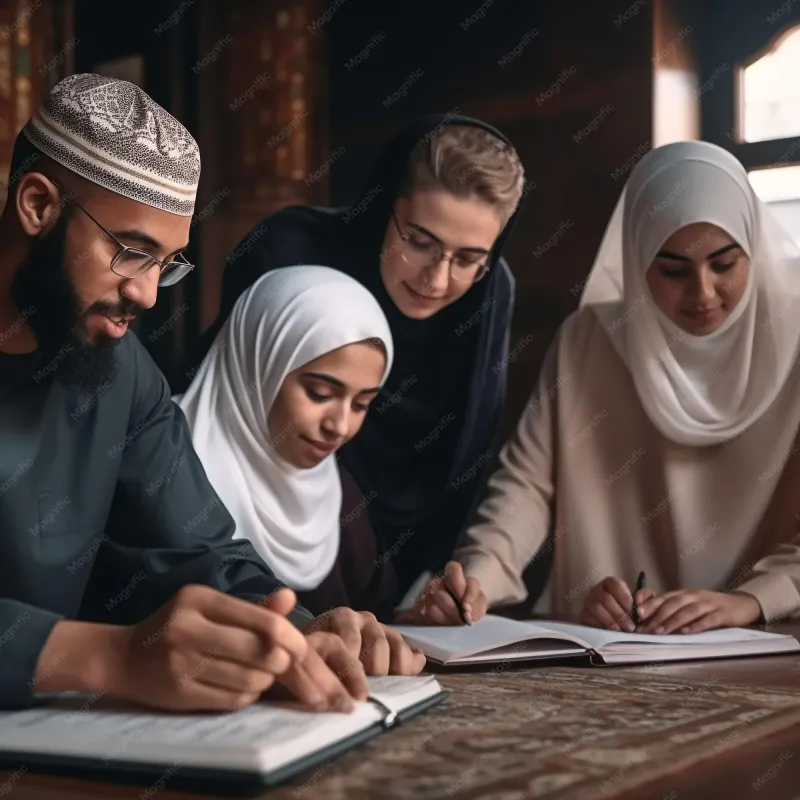
Why Reading the Quran in Arabic Changes Everything — And How to Begin
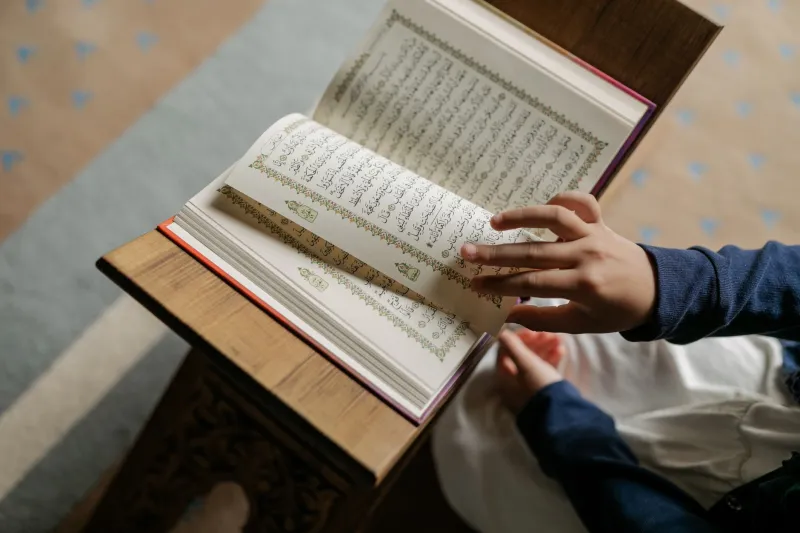
Let me begin with a confession that many American Muslims will recognize: for years, I read the Quran almost exclusively in English translation. The Sahih International, Yusuf Ali, and Muhammad Asad renderings sat on my bookshelf, well-worn and annotated. I believed, reasonably enough, that understanding the meaning was what mattered most. The Arabic, I told myself, was for those who had grown up speaking it — not for someone who had come to Islam later in life, or whose family had never spoken the language.
I was, I now understand, settling for a photograph of a landscape I had never visited.
This is not a criticism of English translations, which are indispensable tools for Quranic study. It is an argument — drawn from linguistics, theology, and the testimonies of ordinary Muslims who made the journey into Arabic — that the original language of the Quran carries a dimension of meaning and spiritual resonance that translation, however skilled, cannot fully convey.
The Untranslatable Quran
The Arabic language is, by its structural nature, extraordinarily dense with meaning. A single root — typically three consonants — can generate dozens of related words, each carrying the conceptual weight of its origin. The word sabr, commonly translated as "patience," also contains within it the ideas of steadfastness, endurance, restraint, and the deliberate containment of emotion. When the Quran commands sabr, it is not simply asking believers to wait quietly; it is invoking an entire architecture of interior strength.
No English word captures all of that. The translator must choose — and in choosing, must necessarily leave something behind.
Consider the word taqwa, rendered variously as "fear of God," "God-consciousness," "piety," or "righteousness." Each translation is defensible; none is complete. Taqwa describes a state of heightened awareness of the divine presence, a protective vigilance that shapes every decision and interaction. A believer who understands this word in Arabic carries a richer, more actionable spiritual concept than one who has only encountered its English approximations.
Multiply this across 6,236 verses, and the cumulative difference between reading the Quran in Arabic and reading it in translation becomes vast.
What Changes When You Hear — and Understand — the Original
There is a moment that many students of Quranic Arabic describe in nearly identical terms: the first time a verse they have recited for years suddenly reveals a layer of meaning they had never noticed. A word they assumed was simply "mercy" turns out to be rahman — mercy vast and encompassing, extended to all creation — while a nearby word is rahim, the mercy that is intimate, particular, and personal. Both words appear in Al-Fatiha, the surah recited in every prayer. Understanding the distinction changes how that prayer feels.
This is not an academic exercise. It is a transformation in the quality of spiritual attention. When the words of the Quran carry meaning rather than sound alone, recitation becomes an act of comprehension as well as worship. The heart and the mind engage simultaneously, producing a depth of presence that is difficult to achieve when one is reciting sounds whose significance remains opaque.
Omar J., a software developer in the San Francisco Bay Area who began studying Quranic Arabic in his mid-thirties, describes the experience vividly. "I had been praying five times a day for fifteen years. When I started understanding what I was actually saying, it was like the prayers opened up. I wasn't just going through the motions — I was in a conversation."
Addressing the Barriers American Muslims Face
For many Muslims in the United States, the path to Quranic Arabic is obstructed by a set of very real challenges. There is the time constraint — Arabic is a complex language, and the demands of American professional and family life leave little room for sustained study. There is the intimidation factor — the script looks foreign, the grammar is intricate, and the gap between Modern Standard Arabic and Classical Quranic Arabic can feel discouraging. And there is, for many converts or second-generation Muslims whose families did not speak Arabic at home, a sense that this is simply not their language to claim.
Each of these barriers deserves a direct response.
On the question of time: Quranic Arabic literacy does not require fluency. A focused student who dedicates twenty to thirty minutes daily to structured study can, within six to twelve months, build sufficient vocabulary and grammatical understanding to follow the meaning of many frequently recited passages. The goal is not to write Arabic poetry; it is to unlock the Quran.
On the question of complexity: the Arabic of the Quran, while rich, is also remarkably consistent. The same vocabulary recurs throughout the text, meaning that learning the most common Quranic words yields an outsized return. Resources such as the "80% of the Quran in 80 words" approach, popularized by several contemporary educators, demonstrate that a relatively small vocabulary provides access to the majority of the text.
On the question of belonging: the Quran was not revealed to Arabs alone. It was revealed, as the text itself declares, as guidance for all of humanity. Learning Quranic Arabic is not an act of cultural appropriation; it is an act of spiritual inheritance that belongs equally to every Muslim, regardless of background.
Where to Begin
For those ready to take the first step, the landscape of accessible resources has never been richer. Live Quran offers structured Arabic instruction alongside live recitation sessions, allowing students to connect the sounds they are learning with the meaning they are pursuing simultaneously. This integrated approach — hearing the language recited beautifully while building comprehension — mirrors the way the early Muslim community learned the Quran.
Additional starting points include:
- Arabic with Husna and similar online platforms designed specifically for Quranic Arabic beginners, with no prior Arabic knowledge assumed.
- Bayyinah Institute's "Arabic with Nouman" series, which has introduced hundreds of thousands of English-speaking Muslims to the grammatical structures of the Quranic text.
- Local masjid classes, which offer the added benefit of community learning and in-person accountability.
- Flashcard applications such as Anki, loaded with high-frequency Quranic vocabulary, for consistent daily review in small increments.
The investment required is modest. The return — a living, comprehending relationship with the word of Allah — is immeasurable.
A Language That Belongs to Every Muslim
The Quran has been called al-mu'jiza al-khalida — the eternal miracle. Part of what makes it miraculous is that its language has remained unchanged for over fourteen centuries, accessible to any person willing to learn it. The same words that moved the Companions of the Prophet move students in community centers in Detroit, living rooms in Atlanta, and virtual classrooms connecting learners across the country.
Translations are a beginning. Arabic is the destination. And the journey, it turns out, is one of the most rewarding a Muslim can undertake.