From Recitation to Comprehension: Advanced Pathways into Classical Arabic and Quranic Grammar
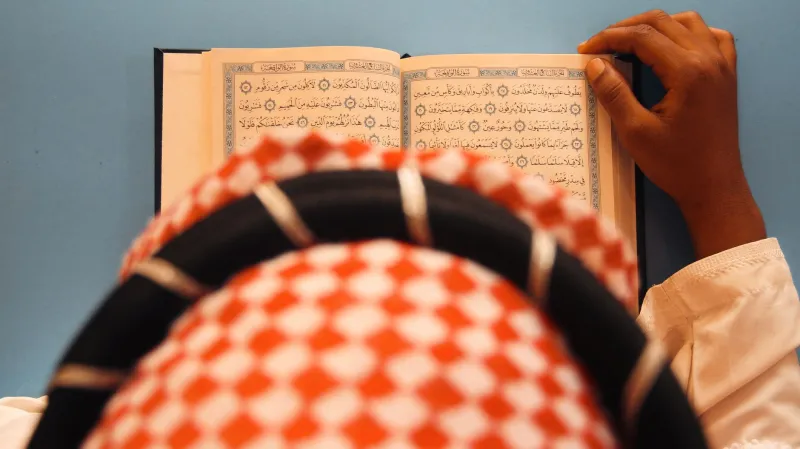
There comes a point in many a Muslim learner's journey when recitation alone no longer feels sufficient. You can move through a page of the Quran with relative fluency, your tajweed is clean, and your makhaarij (articulation points) are well-practiced. Yet the meaning of what you are reading remains largely opaque — present in translation, perhaps, but not yet alive in the original Arabic. That gap between recitation and genuine comprehension is one of the most common and most motivating challenges facing intermediate Quranic learners in the United States today.
Bridging that gap requires more than vocabulary lists and basic grammar drills. It demands engagement with the classical linguistic tradition that produced the Quran's interpretive sciences — a tradition that is rigorous, layered, and deeply rewarding for those willing to invest in it seriously.
Why Classical Arabic Is Its Own Discipline
Modern Standard Arabic (MSA), taught in most American universities and language programs, is a useful tool for contemporary communication. It is not, however, the same linguistic register as the Arabic of the Quran. Classical Quranic Arabic — sometimes called fusha al-Quran — operates within a grammatical and rhetorical framework that predates and in many ways exceeds the conventions of modern formal Arabic.
The distinction matters for serious learners because much of the Quran's depth — its layers of meaning, its rhetorical precision, its interpretive complexity — is embedded in grammatical structures that modern Arabic has either simplified or abandoned. A word's grammatical case (i'rab), for instance, can fundamentally alter the meaning of a verse. The difference between a noun in the nominative versus the genitive case is not a minor technical detail — it is often the hinge upon which an entire theological interpretation turns.
This is why classical Muslim scholars devoted entire disciplines to Quranic grammar. Works like Al-Itqan fi Ulum al-Quran by Imam al-Suyuti and Mughni al-Labib by Ibn Hisham represent centuries of accumulated grammatical analysis applied directly to the Quranic text. Engaging with these resources — even in translation — opens dimensions of understanding that no modern Arabic course can provide.
Building the Foundation: Core Grammatical Concepts to Master
For learners transitioning from basic to advanced Quranic Arabic study, several grammatical domains deserve focused attention.
I'rab (Grammatical Case Analysis): Arabic is a highly inflected language, meaning that the endings of words change based on their grammatical function in a sentence. Mastering i'rab — the ability to identify and parse these case endings — is perhaps the single most transformative skill for Quranic comprehension. Classical commentators routinely disagree about the i'rab of specific words, and these disagreements often reflect genuine differences in theological interpretation.
Sarf (Morphology): Arabic words are built from trilateral roots, and understanding how prefixes, suffixes, and vowel patterns modify root meanings allows learners to decode unfamiliar vocabulary with remarkable efficiency. A student who understands the morphological pattern fa'ala (the basic verb form) and its derivatives can recognize dozens of related words across the Quran without having memorized each one individually.
Balagha (Rhetoric and Eloquence): The Quran's literary excellence is not merely aesthetic — it is considered a dimension of its miraculous nature (i'jaz al-Quran). Classical Arabic rhetoric encompasses three sub-disciplines: bayan (clarity and figurative language), badi' (stylistic embellishment), and ma'ani (meaning and sentence structure). Familiarity with these categories allows learners to recognize and appreciate rhetorical devices — metaphor, ellipsis, parallelism, and hyperbole — that carry interpretive weight.
Understanding the Context of Revelation: Asbab al-Nuzul
Quranic verses were not revealed in a historical vacuum. Each passage was revealed at a specific moment in the life of the early Muslim community, often in direct response to events, questions, or challenges faced by the Prophet and his companions. The science of asbab al-nuzul (occasions or causes of revelation) provides this historical context and is an indispensable tool for accurate interpretation.
For American Muslim learners, engaging with asbab al-nuzul literature can be a revelatory experience. Understanding, for instance, that a particular verse about financial ethics was revealed in response to a specific commercial dispute in early Medina gives that verse a human texture and a contextual precision that no decontextualized reading can provide. It also guards against the misapplication of verses by anchoring their meaning in the circumstances of their original revelation.
Accessible English-language resources on asbab al-nuzul include the translated works of al-Wahidi and al-Suyuti, as well as contemporary scholarly works that integrate this material into broader Quranic studies curricula.
Engaging with Tafsir: Choosing Your Commentaries Wisely
Tafsir — Quranic exegesis — is the intellectual heart of classical Islamic scholarship. The major tafsir works represent centuries of accumulated linguistic, theological, legal, and spiritual analysis, and engaging with them meaningfully requires both preparation and guidance.
For intermediate learners, a tiered approach to tafsir is recommended. Begin with accessible contemporary commentaries in English, such as In the Shade of the Quran by Sayyid Qutb or The Study Quran edited by Seyyed Hossein Nasr, which provide scholarly depth without requiring advanced Arabic proficiency. These works introduce readers to the major interpretive questions surrounding key passages and familiarize them with the methodological conventions of classical tafsir.
As Arabic proficiency grows, consider engaging with the classical texts themselves — beginning with Tafsir Ibn Kathir, which is widely considered the most accessible of the major classical commentaries, before advancing to the more linguistically demanding Al-Kashshaf by al-Zamakhshari (which prioritizes grammatical and rhetorical analysis) or the encyclopedic Mafatih al-Ghayb by Fakhr al-Din al-Razi.
It is worth emphasizing that tafsir is not a discipline to be approached in isolation. Classical scholars consistently advised that Quranic interpretation be undertaken under the guidance of qualified teachers who can provide the necessary context and prevent misreading. This is as true today as it was in the eighth century.
Structuring an Advanced Study Practice
Knowing what to study is only half the challenge. Sustaining a rigorous study practice alongside the demands of American professional and family life requires deliberate structure.
Consider dedicating specific sessions to different dimensions of your study: one session per week focused exclusively on grammatical parsing of a short passage, another on reading tafsir commentary on the same passage, and a third on reviewing vocabulary derived from the morphological roots you have encountered. This integrated approach — parsing, commentary, and vocabulary — reinforces learning across multiple cognitive pathways simultaneously.
Live learning platforms, including Live Quran, offer structured courses in Quranic Arabic at the intermediate and advanced levels, often taught by scholars with formal training in Arabic linguistics. Supplementing self-directed study with live instruction accelerates progress and ensures that grammatical analysis is being applied correctly.
The Horizon of Understanding
Engaging seriously with classical Arabic grammar and Quranic interpretive methodology is not a project with a finish line. The scholars who dedicated their lives to this pursuit did not consider themselves to have arrived at a final understanding — they considered themselves to be perpetual students of a text whose depths, by its own testimony, are inexhaustible.
For the American Muslim learner who has moved beyond basic recitation and is now reaching toward genuine comprehension, this is not a discouraging reality. It is an invitation. Every grammatical insight, every contextual discovery, every encounter with a classical scholar's reasoning across the centuries is a step deeper into a living tradition — one that connects you, through an unbroken chain of learning, to the very first community that heard these words recited aloud.