Hifz Without Limits: The Adult Learner's Guide to Quranic Memorization at Any Age

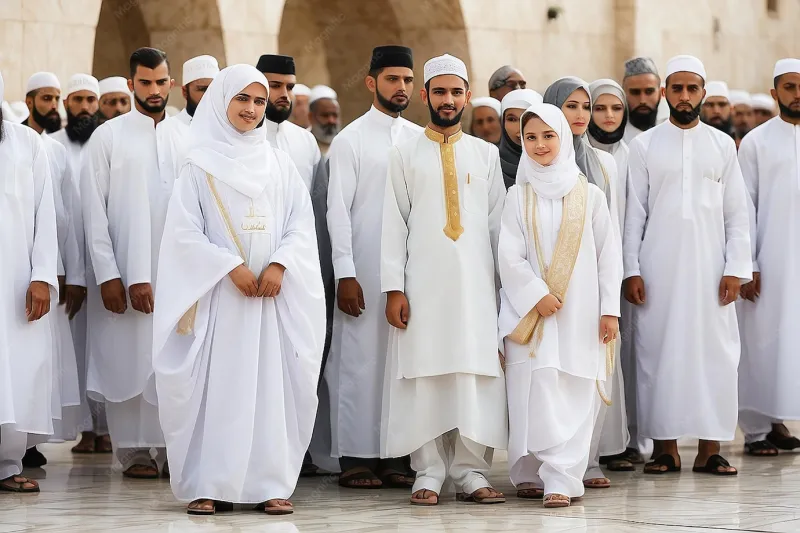
Photo: Udbhav Rai, CC BY 3.0, via Wikimedia Commons
There is a story that circulates quietly in Muslim communities across America: a grandmother completes her memorization of the Quran at seventy-two. A physician begins his hifz journey at forty-five, memorizing verses during his commute. A recently divorced mother of three discovers, in the discipline of Quranic memorization, an unexpected source of stability and peace. These are not exceptional anomalies. They are increasingly common, and they carry a message that deserves to be stated plainly: it is never too late to memorize the Quran.
The assumption that hifz—the complete memorization of the Quran—is a pursuit reserved for children has deep cultural roots. In many parts of the Muslim world, formal memorization programs begin in early childhood, when the brain's linguistic plasticity is at its peak. This tradition has produced generations of hafiz, and its value is beyond question. But the inference that adults cannot or should not pursue the same goal represents a significant misreading of both Islamic tradition and cognitive science.
What the Science Actually Says About Adult Memory
The human brain retains a remarkable capacity for new learning throughout the lifespan. While it is true that certain forms of rote memorization are somewhat easier in childhood, adult learners possess compensating advantages that are frequently overlooked. Adults bring stronger comprehension skills, deeper emotional investment, superior metacognitive awareness—the ability to monitor and adjust one's own learning—and, crucially, the motivation that comes from choosing a practice freely rather than having it assigned.
Cognitive research on memory consolidation suggests that spaced repetition—reviewing material at gradually increasing intervals—is among the most effective techniques for long-term retention, and it works robustly in adult learners. The same research indicates that meaning-based encoding, associating new material with existing knowledge and emotional significance, substantially enhances retention. For adult Muslims approaching the Quran with genuine spiritual investment and at least some familiarity with its themes, both of these mechanisms are naturally engaged.
Sleep, physical exercise, and stress management also play documented roles in memory consolidation. Adult learners who attend to these factors—and who approach their hifz practice with realistic expectations rather than anxiety—often find that their progress is steadier than they anticipated.
Realistic Timelines and Daily Commitments
One of the most important things an adult beginning hifz can do is establish honest, individualized expectations. The Quran contains 6,236 verses across 114 surahs. A child in a full-time memorization program may complete hifz in two to four years. An adult with significant professional and family responsibilities, dedicating thirty to forty-five minutes daily to memorization, should realistically anticipate a journey of five to ten years—or longer.
This is not a discouraging figure. It is a liberating one. A ten-year hifz journey undertaken with consistency and sincerity is a ten-year practice of daily intimacy with the words of Allah. The destination matters, but so does the road.
For those beginning, starting with shorter surahs—particularly those in Juz Amma, the thirtieth and final section of the Quran—provides early momentum and a sense of measurable progress. Many adult learners find it helpful to memorize one to three verses per day, consolidating previous material before advancing. The temptation to rush is real and should be resisted; verses memorized hastily tend to require substantially more review to retain.
Practical Strategies for Busy American Adults
The practical challenge for most American adult learners is not motivation but time. Between professional obligations, family responsibilities, and the relentless pace of contemporary life, carving out dedicated memorization time requires deliberate planning.
Several strategies have proven effective for busy adults:
Anchor memorization to existing routines. Many practitioners find that pairing Quran memorization with a fixed daily activity—morning coffee, a commute, a lunch break, or the period immediately after Fajr prayer—makes consistency far easier to sustain than treating it as a separate, scheduled task.
Use audio repetition throughout the day. Listening to a target verse or passage repeatedly during otherwise unproductive time—driving, exercising, doing household tasks—builds familiarity before formal memorization sessions even begin. This passive exposure significantly reduces the cognitive effort required during active memorization.
Leverage live instruction for accountability. Working with a qualified teacher, whether in person or through a live online platform, introduces a layer of accountability that self-directed study often lacks. Regular recitation to a teacher also ensures that pronunciation and tajweed are correct from the outset, preventing the difficult work of unlearning errors later.
Embrace the review imperative. Memorization without systematic review is, in the long run, wasted effort. Experienced hafiz teachers recommend that for every new verse memorized, at least four times as much review time should be devoted to previously memorized material. Building this ratio into a daily practice from the beginning saves considerable frustration later.
Testimonies from the Journey
The voices of adult learners who have walked this path offer perhaps the most persuasive argument for beginning. Consider the experience of a forty-three-year-old accountant in New Jersey who began his hifz at thirty-eight after his father's passing. "I wanted to recite Quran at his grave in a way that was meaningful," he reflects. "Five years later, I have memorized twelve juz. It has changed the way I pray, the way I think, and honestly, the way I see myself."
Or the retired schoolteacher in suburban Atlanta who began at sixty-one, motivated by her grandchildren's enrollment in a local hifz program. Now seventy, she has completed twenty juz and describes the practice as the most fulfilling intellectual endeavor of her life.
These stories share a common thread: the decision to begin, made in full awareness of the difficulty and the length of the road ahead, followed by consistent, patient effort. The Quran does not ask for perfection. It asks for sincerity and return.
Beginning Today
For the adult Muslim reading this and feeling the pull of the hifz journey, the most important step is simply the first one. Find a qualified teacher. Choose a starting point. Set a modest, sustainable daily goal. And trust that a practice rooted in the love of Allah's words carries within it the grace required to sustain it.
The Quran has been memorized by the elderly, the infirm, the blind, and the newly guided. It has been memorized under conditions of hardship and in moments of peace. Age has never been its barrier. The only true barrier is the decision not to begin.